



A Legend Reforged in Fire and Doubt
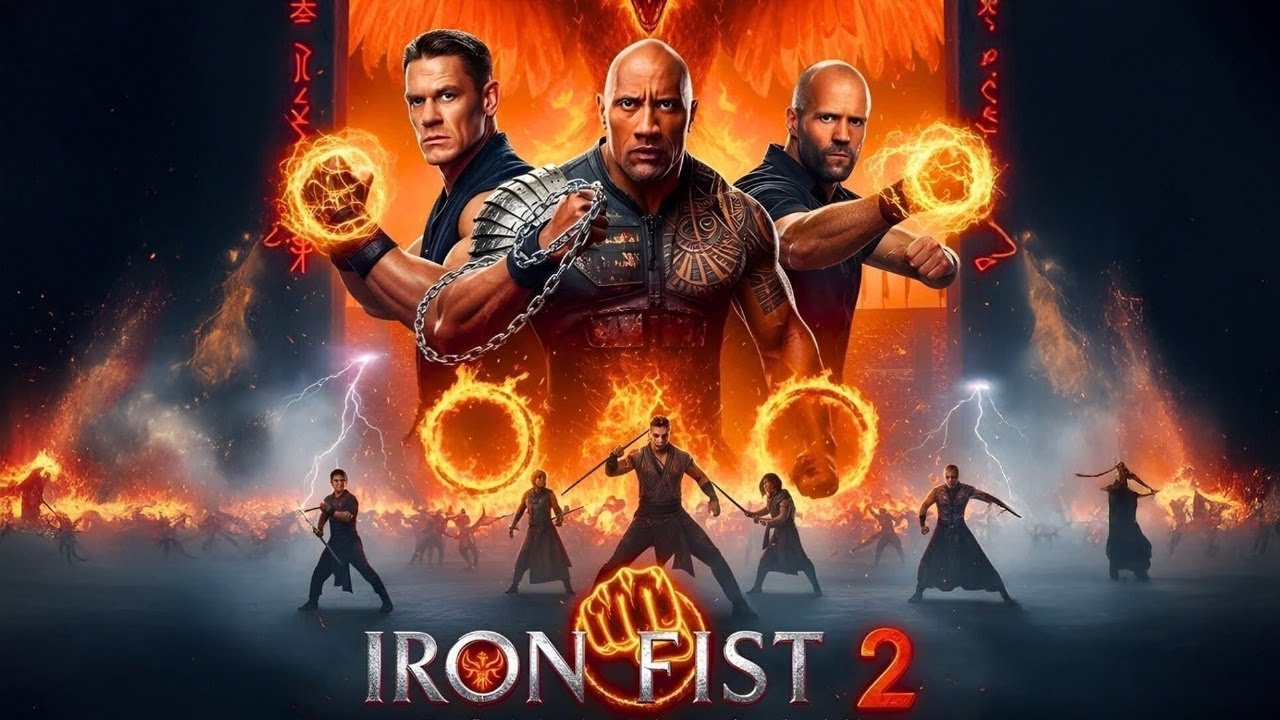
There is a particular weight that comes with resurrecting a myth. IRON FIST 2 (2026) understands this burden and, to its credit, leans into it rather than running from it. This sequel does not attempt to simply be louder, faster, or more explosive than its predecessor. Instead, it asks a more dangerous question: what is the cost of wielding power that was never meant to be free?

Danny Rand has reclaimed the mantle of the Iron Fist, but the film wisely avoids treating this as a triumphant endpoint. From its opening moments, director and creative team frame Danny’s power as unfinished business, something unstable and spiritually corrosive if misunderstood. The result is a superhero film that feels less like a victory lap and more like a reckoning.

Story and Themes: When Power Demands a Price
The narrative draws Danny back into K’un-Lun, not as a savior returning home, but as a man summoned to answer for what he represents. The idea of corrupted chi infecting ancient bloodlines is more than a plot device; it becomes a metaphor for legacy itself. Traditions, the film suggests, can rot when they are preserved without reflection.

At its core, IRON FIST 2 is about spiritual erosion. The dragon that granted Danny his power is no longer a distant symbol but an active moral presence, demanding sacrifice instead of brute strength. The screenplay explores this tension with surprising patience, allowing scenes of quiet doubt to breathe between moments of violence.
This is not a film interested in simple heroism. Danny’s fear of becoming the very thing he swore to destroy is not rhetorical; it is the emotional engine of the movie. Every choice he makes feels like it could tip him toward enlightenment or damnation.
Character Development: Danny Rand Grows Up
In earlier incarnations, Danny Rand often felt like a hero defined by his abilities rather than his convictions. Here, that imbalance is corrected. He is still capable, still formidable, but he is also deeply unsure. That uncertainty gives the character texture.
The strained relationship with Colleen Wing provides the film with its most human moments. Their bond is not tested by betrayal or melodrama, but by ideology. Colleen questions whether any weapon, no matter how sacred, can remain pure in a broken world. Danny, meanwhile, clings to the hope that intention matters more than outcome.
Supporting characters within K’un-Lun are sketched with economy but purpose. Elders, warriors, and antagonists all reflect different responses to power: obsession, denial, and surrender. Together, they form a moral landscape that Danny must navigate without a map.
Martial Arts and Action: Beauty with Consequences
The action sequences in IRON FIST 2 are among its strongest assets, not because they are relentless, but because they are expressive. Each fight is staged as an argument rather than a spectacle. Bodies move with precision, but also with restraint, as if every strike carries ethical weight.
The choreography blends traditional kung fu forms with a more grounded, almost painful realism. Blows land with consequence. Characters tire. Injuries linger. This physical honesty reinforces the film’s thematic insistence that power is never free.
- Fluid long takes that respect the performers’ skill
- Minimal over-editing, allowing movements to speak for themselves
- Action scenes that advance character rather than interrupt it
When the Iron Fist is unleashed, it feels earned, even frightening. The glowing fist is no longer a visual flourish; it is a warning sign.
Mythology and World-Building: K’un-Lun Reimagined
K’un-Lun has often been portrayed as a mystical abstraction, a place more talked about than truly seen. This film finally gives it substance. The city feels ancient but vulnerable, beautiful yet scarred by its own history.
The concept of fractured realms and forgotten prophecies is handled with restraint. Rather than drowning the audience in exposition, the film allows myths to emerge through ritual, architecture, and whispered conversations. This approach respects the intelligence of the viewer and preserves the mystery that makes the setting compelling.
Importantly, the film does not romanticize tradition. K’un-Lun’s fire-lit streets and corrupted bloodlines suggest that isolation has a cost, and that purity can become a form of cruelty.
Direction, Tone, and Visual Language
The visual palette of IRON FIST 2 favors earth tones, firelight, and shadow, grounding its fantasy elements in something tactile. The camera often lingers on faces after moments of violence, inviting reflection instead of applause.
The pacing may surprise viewers expecting constant momentum. This is a deliberate choice. The film slows down when it needs to ask moral questions and accelerates only when those questions demand confrontation.
Music is used sparingly, allowing silence to carry emotional weight. When the score does swell, it feels less like a cue for excitement and more like a lament.
Strengths and Weaknesses
- Strengths: Mature themes, disciplined action choreography, and a more fully realized Danny Rand
- Weaknesses: Deliberate pacing may frustrate viewers seeking a lighter superhero experience
- Notable Achievement: Treating myth as a living, dangerous force rather than decorative lore
The film occasionally risks over-seriousness, and a few supporting characters could benefit from deeper exploration. Still, these are minor flaws in a work that knows exactly what it wants to say.
Final Verdict: A Superhero Film with a Conscience
IRON FIST 2 (2026) is not interested in reassuring its audience. It challenges the idea that power, once earned, can ever truly belong to one person. By the time the final choice is made, the question is no longer whether Danny Rand can save K’un-Lun, but whether he can save himself without losing his soul.
This is a sequel that deepens rather than dilutes its mythology, offering a thoughtful, sometimes uncomfortable meditation on strength, sacrifice, and spiritual responsibility. It may not please everyone, but it earns its place by daring to be more than a spectacle. Like the Iron Fist itself, the film burns brightest when it hurts the most.